Affect vs. Effect
What Affect and Effect?
Affect :
- Is a Verb
- To act on --> it produce an effect
Effect:
- Is a Noun
- A result or consequence
For example:
In the forest, there was a heavy storm, it struck lightning to the trees, leaving a pile of ashes.
The affect is the tree being struck by lightning.
The effect was the tree turning into pile of ashes cause of lightning.
Affect :
- Is a Verb
- To act on --> it produce an effect
Effect:
- Is a Noun
- A result or consequence
For example:
In the forest, there was a heavy storm, it struck lightning to the trees, leaving a pile of ashes.
The affect is the tree being struck by lightning.
The effect was the tree turning into pile of ashes cause of lightning.
#Black Live Matter Article Respond
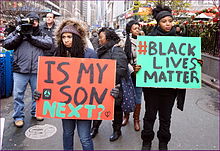
In New School, we were assign read the article, #Black Live Matter. It talk about this huge movement that happened in the 1900's that protested the poor treatment that black people receive. In the 2000's the way people spread the news about the movement change dramatically because of social media. It also explained how the information is shared because some imagine that was shared to everyone is miss interpreted or over exaggerate making difficult to what to believe in the internet.
Lab Write Up Quality Improvement


How to Write a Research Paper
Topic Sentace:
This is the first sentance of your body paragraph. It should clearly state the environmental problem you are focusing on for this paper.
Ex: The rapid decline of the bee population in the United State poses a serious threat to the global agriculture.
Reminders:
-Write in third person. No first or second person
-Get to the point. Don't dance around it.
-Use powerful vocabulary
-Make sure you answer the "why"
Concrete Detail #1
Immediately back up your topic sentance with evidence from your research.
Ex: A fact released by the White House state that "honey bees enable the production of at least 90 commercially grown crops in North America. Globally, 87 of the leading 115 food crops evaluated are dependent on the animal pollinators, contributing 35% of global food production" (Office of the Press Secretary).
Avoiding Plagiarisms Vocob./Notes
1. Direct quotation:
-Involves integrating all or part of an original quotation from source material into your own writting with quotation mark proper citation.
2. Paraphrasing:
-Involves putting a quote from source material into your own words. A paraphrase must also be credited to the original source.
-Paraphased material is usually shorter than the original passage, taking a somewhat broader segment of the source and condesing it slightly.
3. Summarizing
-Involve putting the main idea(s) into your own words, including only the main point(s).
-Once again, it necessary to credit summarized ideas to the original source.
-Summaries are significantly shorter than the original and take a broad overview of the source material.
4. Plagiarism
-Is when you represent words, ideas, or information you obtained from another source as your own (intentionally or unintentionally) by not including proper citation.
Claim:
-Need to be specific and answer the "why"
-Keep wording specific and concise
-If you only present one claim about a literacy text, include title and author
Ex: In Ray Bradbury's novel Fahrenheit 451, he uses short sentences and personification
Intro quotes:
Thing you should already know...
-Need to be specific and answer the "why"
-Keep wording specific and concise
-If you only present one claim about a literacy text, include title and author
Ex: In Ray Bradbury's novel Fahrenheit 451, he uses short sentences and personification
Intro quotes:
Thing you should already know...
Shakespear Sonnet
Sonnet : "Little song"
Rhyme Scheme
- All Shakespeare sonnet have 14 line
- The rhyme scheme for shakespear sonnet alway end in two with two line having a couplet and the rest above rhyming with the line which is two line between it.
Vocabulary for Shakespear Sonnets
1.Temperate :
(adj.) mild or moderate in climate; not extreme
2.Lease :
(noun) a period of temporary ownership
3.Complexion :
(noun) the skin and features of the face
4.Declines :
(verb) moves in a forward direction
5.Untrimmed :
(adj.) made or left plain, unadorned or disorderly
6.Impediments :
(noun) Thing that block or get in the way; obstacles
7.Alters :
(verb) make different without completely changing
8. Tempests :
(noun) strong or severe storm
9. Bark :
(noun) a small boat
10. Compas:
(noun) Range, usually expressed in a curved or circular pattern
11. Internal Rhyme :
(noun) a rhyme involving a word in the middle of a line and another at the end of the liner or in the middle of the next.
How to Write your Essay Formal
Jan.10, 2017
Formating
- Double Space
Tone
- Remove all 1st. and 2nd person
- Ex."I","Me","You","Your"
- Remove all contrast
- Ex. can't , dosn't, ect.
- Use Formal Language
Thesis
- Title (Italic)
- Author's full name
- Claim
- 3 moment from...
The Elizabethan Era
Nov. 28, 2016
Elizabethan Acting and Theater
- Many social interaction occur in the theater because it was warm and provided entertainment.
- Actor back then were, they receive no respect despite being famous.
- Women were not allowed to act.
- Each layer of theater represent the level of power they had. Lower level represent the commuter, while the higher level represent the noble and monarch.
- One of the most famous people in the theater were Shakespeare.
Clothing and Hygiene
- Monarch: the highest class of people were golden jewelry and there are the only one that were purple clothing which mean absolute power.
- The hygiene was terrible, they didn't have running water and they only take a shower once a year since the processes was really difficult
The plague
- The plague effective Europe from 14 century all the way to 16 century.
- First the fleas infect the black rat, the black rat spread the disease to the people and 1/3 of 14 century Europe population died.
- other devastated disease were the dysentery and typhoid affected the digestion system with diarrhea
Social Hierarchy, gender roles and professions in Elizabethan England
- Upper class: only high level class women can get higher education or own an estate
- Monarch: The monarch is queen Elizabeth and showed that a women could be strong and powerful
- Gentry: work to become knight and squire
- Nobility: you would be born to nobility
- Middle/lower class: Could only buy the necessities
Elizabethan Crime and Punishment
Jail:
- held people before punishment
Most Common Crime
- Theft
- Begging
- Poaching
- Adultery
- Fraud
Heretics
- Burned to death at stake
- late 1700 the government found a more human way
Traitor
- Hung then cut alive
Torture
- They were extreme, painful and excruciating
- Greater crime = greater punishment
Lower class crime and punishment
- Common punishment: hanging, burning whipping, ect.
Upper Class crime
- Murder
- Withcraft
- Treasing
- Most upper class punishment were hanged.
The Greatest punishment
- When people commite treasing, they recieve drawing or quartering
England condition
The reason why it call the Elizabethan era because it was named after there queen, Queen Elizabeth I. It lasted from 1558 - 1603. The country that was effective by the era was
Tucketo Panel Notes
Nov. 8, 2016
Introduction :
- Introduction are the most difficult section of an essay/argumentative paragraph.
- It usually have hook, transition, thesis/hypothesis.
- Hook must be engaging, grab someone attention.
- Thesis must specified, why is it so important.(ex: Title, Author,Claim)
- Have 1-2 pieces of evidence/quote in your introduction however do not flood it with fact.
- Keep your introduction between 3-5 sentence
- Avoid question as your hypothesis
- Keep it in third person
Arg. Paragraph Note
Sep.13, 2016
Claim: your position on topic + 1 reason
Ex: Viruses are not alive because [ reason #1 ]
Data: Introduce quote expert, data/# from a large study, info (citation)
Ex: In her article "Living Viruses" Judy Miller Ph.D states " " (citation)
Warrant: Explain and analyze how your data support your claim. (sent. 2-3)
NO first or second person writting (I believe, your, you, ect.)
Write in the objective third person
Ex: The scientific community said.....
Counter claim: Present a opinion opposite from your own.
Ex: Scientist argue... or Scientist at UCLA argue that...
Rebuttal: Present another piece of data/info.( a quote from an expert or #/% from study) to prove the counter claim is not as strong as your initial claim.Explain and analyse how that data refute or weakens the counter claim.
Conclusion statement: Restate your main point in diff. word

No comments:
Post a Comment